Decentralized Internet Infrastructure
Secure Decentralized Internet Access

TBA
Global Nodes
TBA
Monthly Traffic
TBA
Countries
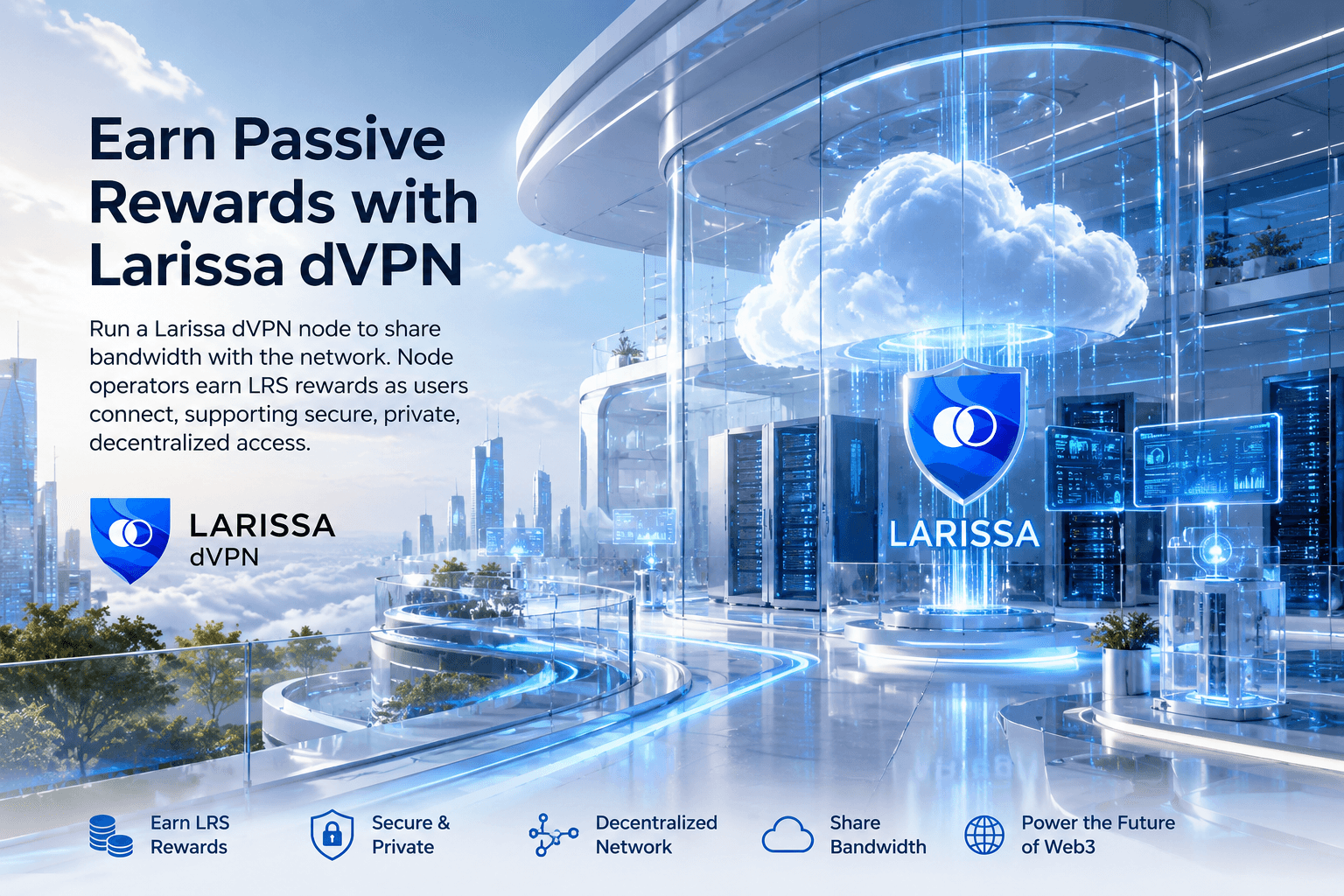
Larissa dVPN provides a decentralized networking layer powered by peer-to-peer nodes across the globe. Users can securely connect through residential IP addresses, access unrestricted internet services, and contribute bandwidth resources through a distributed network architecture.




Features & Benefits
Features & Benefits of dVPN
Residential IP Network
Connect through residential IPs across a global node network for smoother and more natural internet access.
Peer-to-Peer Infrastructure
Bandwidth is powered by decentralized network participants instead of traditional centralized providers.
Censorship Resistant Access
Access the internet with greater freedom through a decentralized network designed for unrestricted connectivity.
Privacy-First Architecture
No central servers or personal data logs, helping users maintain greater privacy and control online.
Encrypted Connections
Encrypted VPN tunnels help secure internet traffic and protect online activity across the network.
Global Node Network
Distributed nodes worldwide provide reliable connectivity, resilience and decentralized network access.
Comparison
Traditional VPN vs Larissa dVPN
Centralized VPN servers
Single provider dependency
User activity logging risks
Limited server ownership
Single point of failure
Geographic restrictions possible
Server congestion issues
Higher censorship vulnerability
Provider-controlled infrastructure
Limited network transparency
Decentralized peer-to-peer network
No central servers
No personal data logs
Residential IP connectivity
Privacy-first architecture
Built-in kill switch protection
Distributed node infrastructure
Greater censorship resistance
Community-powered bandwidth
Secure internet access worldwide
What is Larissa dVPN?
How does Larissa dVPN work?
Does Larissa dVPN use residential IPs?
Is Larissa dVPN privacy focused?
Can I run a Larissa dVPN node?